Mothers: Labor, Narrative, Politics
An archive of my ‘Mothers: Labor, Narrative, Politics Advanced Seminar’ Discussion Essays
-

Memory Particles (Week 14)
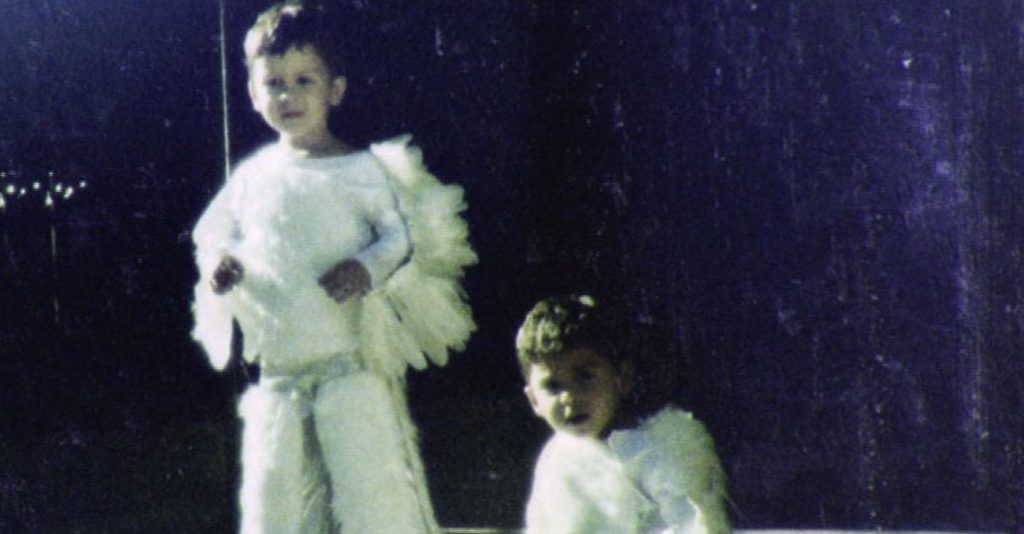
In watching Tour of Duty (Kim and Park, 2012), I was deeply moved by its evocation of “memory particles”. This idea conjured scenes from our course material: Rama’s Medea Castaway; the archival reenactments in Stories We Tell; Finding Christa’s mother-daughter recital; and Omah Diegu’s tale of the snake. Each gestures toward Abraham and Torok’s notion…
-
Learning to Mother at the End of the World (Week 13)
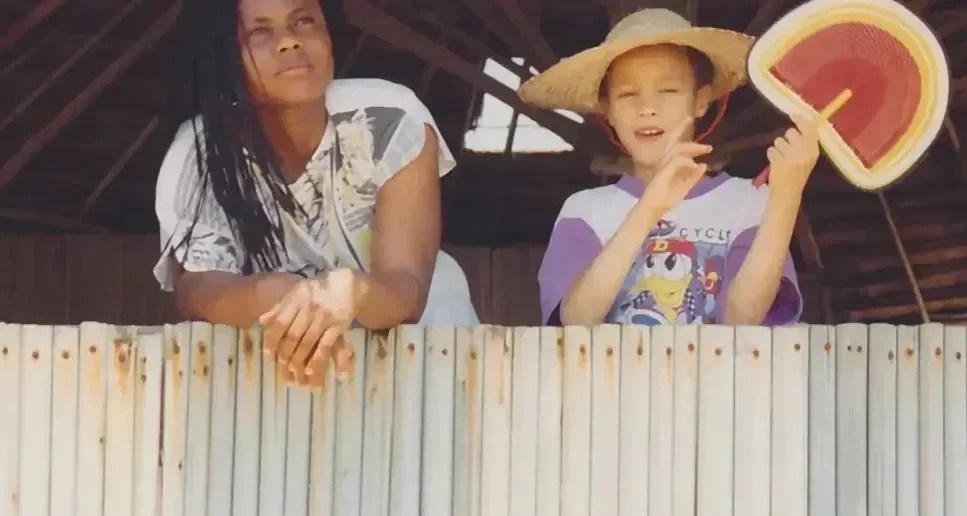
“I cannot shield you from these structures of belief or their profound and abiding effects on you. But I can complicate and unearth them with you” – Julietta Singh, The Breaks As I take this class, I am struck by how often our course material intersects with my day-to-day life. This week, while visiting several…
-
A Way Out (Week 12)
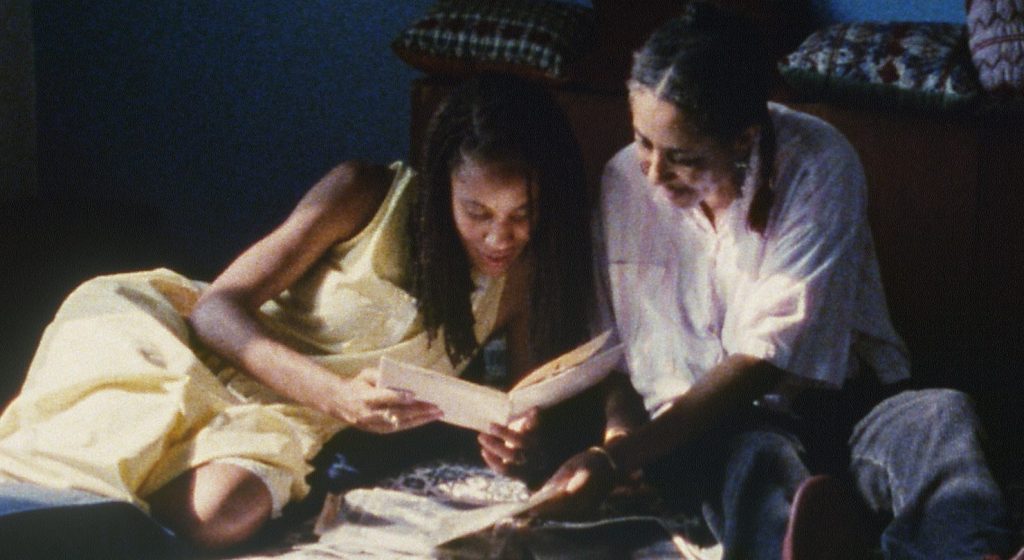
This week’s material invited us to consider the different ways women interface with motherhood — not just in terms of the role itself, but also the sanctioned and unsanctioned spaces that identifying with this role opens up. From mothers dreaming of union with their adopted child, to children seeking the origin of a mythicized maternal…
-
Stoic Ambivalence: The Maternal, Determined (Week 11)
Reading about how an individual’s ability to undergo IVF treatment was shaped by successive stages of medical malpractice was deeply unsettling. Quilter’s writing deftly intertwines the history of IVF with her personal journey, illustrating the challenges she faced in articulating both her understanding of fertility and the medically opaque world of IVF. Much is omitted…
-
“We can’t afford to work for love” (Week 8)
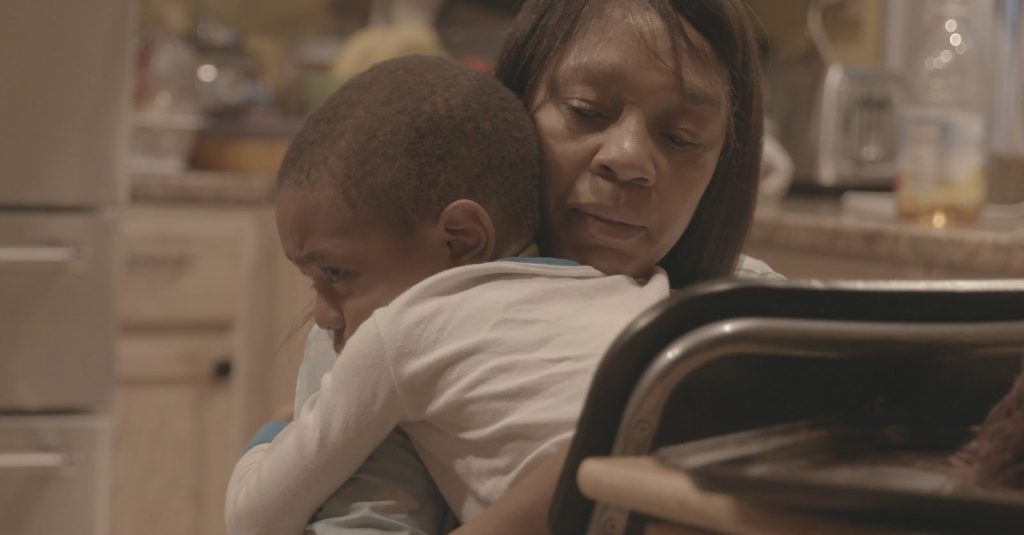
I feel that our discussions of publicness, in many ways, deeply connote visibility. Garbes writes of how, when we envision economies, the imagery typically aligns with places “covered by the media,” like Wall Street offices and factories. She then catalogs the various forms of intrinsically economic work — such as those in “laundry rooms, nurseries,…
-
Hauntology of Pain & Fear (Week 7)
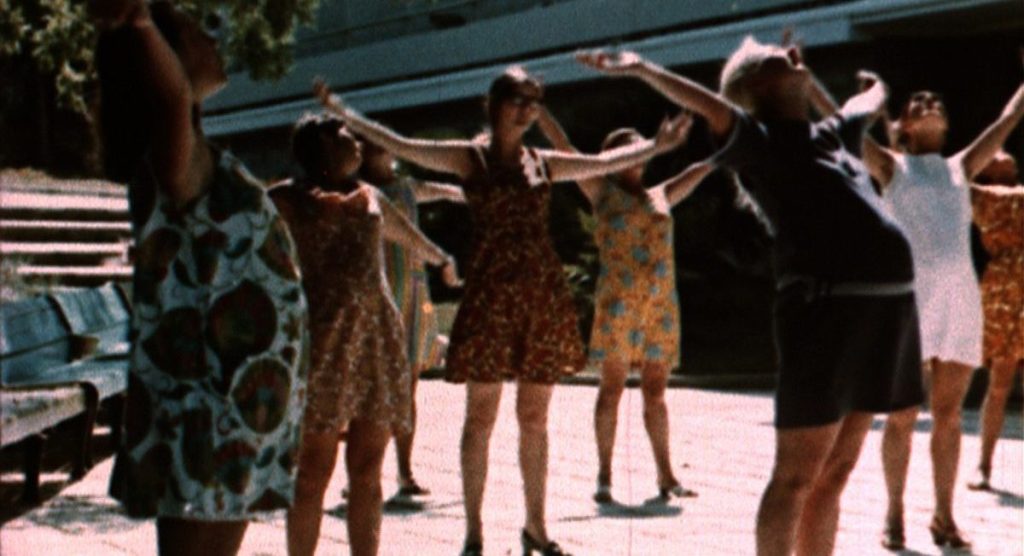
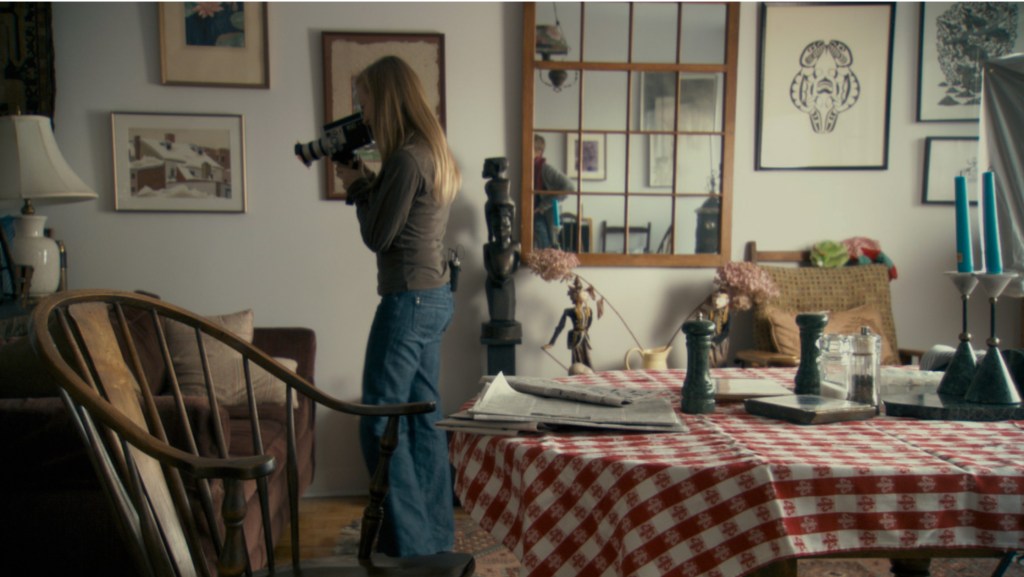
Our screening of Irene Lusztig’s The Motherhood Archives (2013) lingered with me in its dialectical use of visual and sonic montage. I could locate a feeling of suffocation that came from the tinny and “underwater”-like sounds accompanying both the celluloid footage and the eery advertisements for contemporary birthing facilities. Lusztig includes male narrations to emphasize…
-

Radical Mothering, Radical Receiving (Week 6)
In Dana Ward’s poem A Kentucky of Mothers , he writes, “It is happiness more actual than blood & making good its reality by offering myself to me in this authentic picture”. By embracing and seeing all that nourishes him in his home state of Kentucky as a ‘mother’, Ward transcends the biological limitations of…
-
Punctum of Mother Art (Week 5)
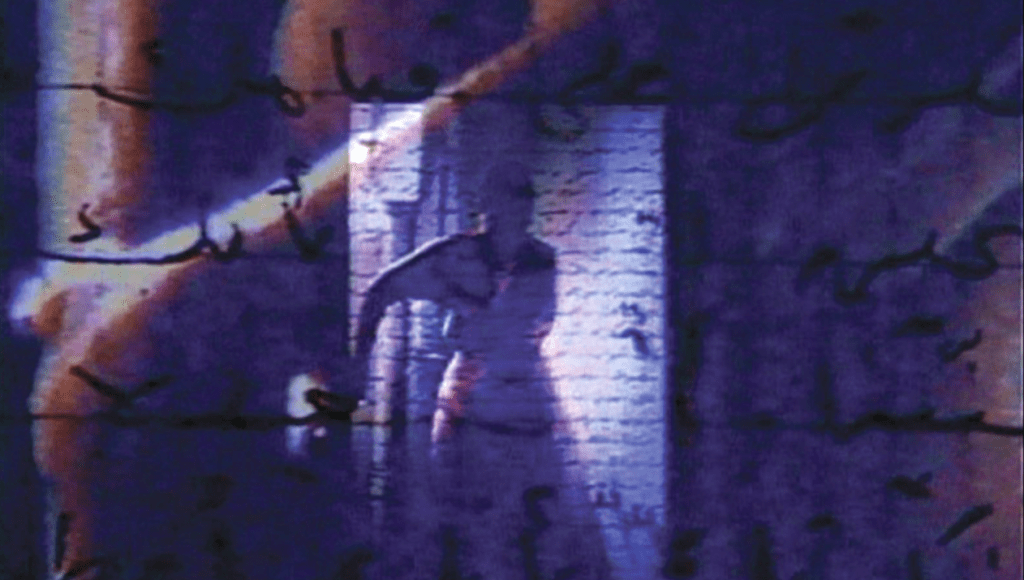
This week, we were asked to look for the punctum — “the detail that pierces or pricks the viewer — within our course material. I found this connection manifesting in several ways through Alison Bechdel’s graphic memoir, Are You My Mother?. The key punctum in this work is how Bechdel distills each character — Donald…
-
Motherbond: Pinpointing Paradoxical Realities (Week 4)
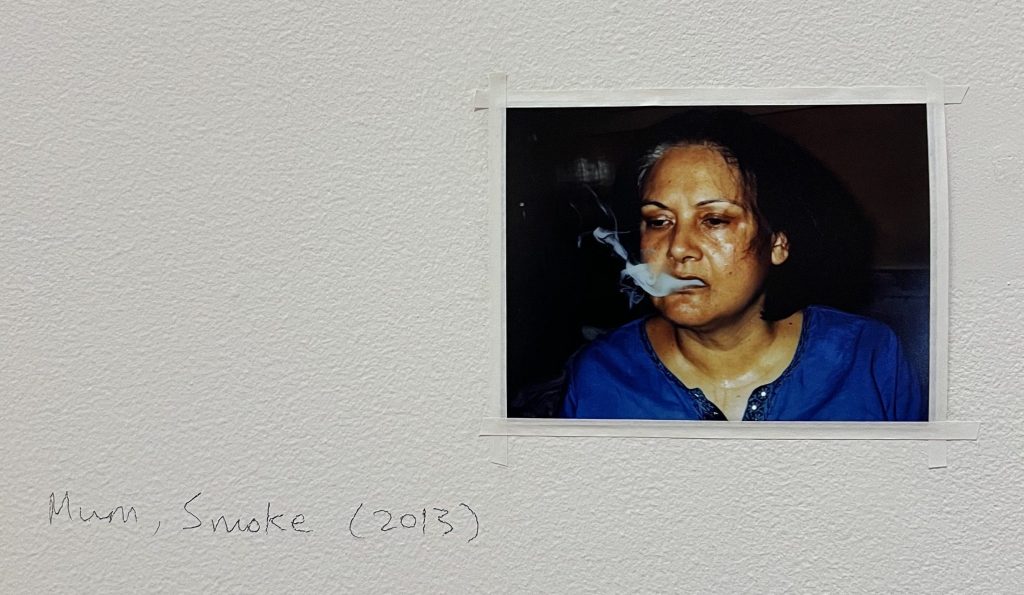
This week, the pairing of our Adrienne Rich readings alongside a visit to Sohrab Hura’s ‘Mother’ exhibit at MOMA PS1 converged upon a theme of “pinpointing paradoxical realities,” namely identifying locations at which our lived experiences exist in conflict with institutional impositions and expectations made of us. Within the chapters of Of Woman Born, Rich…
-
Representations of Maternal Finitude (Week 3)
In this week’s material, the concept of “Maternal Finitude” particularly stood out to me. In The Argonauts, Maggie Nelson introduces this term through Kaja Silverman’s assertion that “the turn to a paternal God comes on the heels of the child’s recognition that the mother cannot protect against all harm, that her milk — be it…
 Jenn Thảo Nguyễn