This week’s material invited us to consider the different ways women interface with motherhood — not just in terms of the role itself, but also the sanctioned and unsanctioned spaces that identifying with this role opens up. From mothers dreaming of union with their adopted child, to children seeking the origin of a mythicized maternal figure; from artists reconciling the demands of caregiving with their professional ambitions, to mothers whose artistic expression is necessarily shaped by their children, both economically and creatively — a wide range of maternal negotiations emerged.
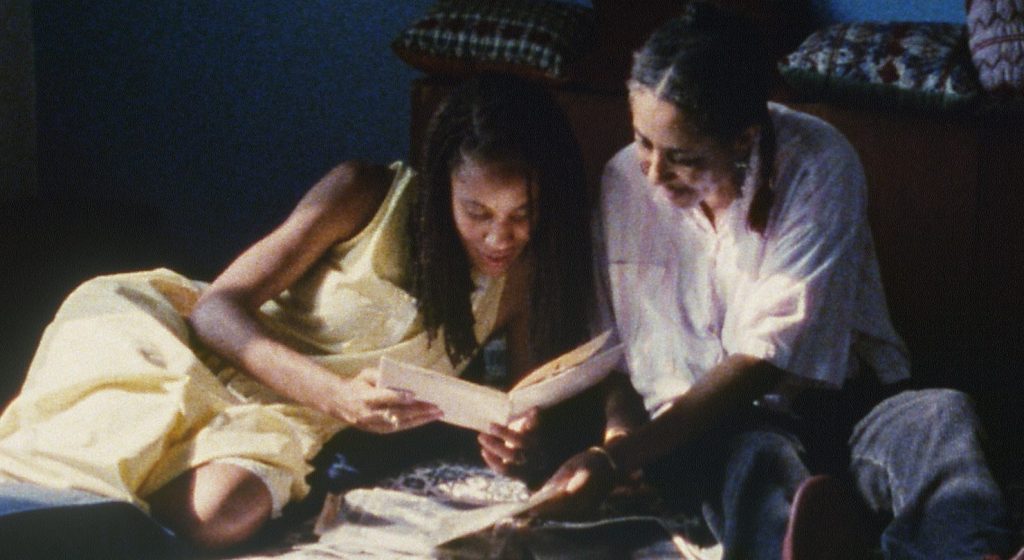
The theme of finding a way out came to the forefront for me. Christa seeks a way out of a perceived lack in her life — one she imagines her birth mother can resolve. Meanwhile, her birth mother seeks an escape from the artistic limitations imposed by motherhood, especially following a separation from her partner. Ballerina Farm’s public reception seems to offer Hannah a way out of the constraints of traditional wifehood, while Aki Goto actively carves a way out of the rigid and highly scrutinized world of “momosphere” blogging, which so often polices representations of motherhood.
I started wondering: is the “way out” we desire merely from patriarchy, capitalism, and the institutionalization of motherhood that these systems support? Or are we also trying to escape something more intimate — something internalized? These sources suggest we may be seeking an exit from the inherited, internal hegemony of motherhood — the values, sacrifices, and self-conceptions passed down from our own mothers or shaped by their absorption of institutional roles. How do we reprogram or deprogram ourselves from the frameworks they absorbed and, often unintentionally, transferred to us?
Billops offers a powerful example of someone who refuses to feel guilt for choosing herself over subjugation to the institution. “How would you know? You’ve never been in my situation,” she says, and there’s little to refute that. Her words expose a truth: that mothers who have made similar sacrifices might not judge her — unless they feel their own sacrifices demand reaffirmation by future generations.
In this way, perhaps the “way out” exists in the willingness to disappoint. I think of Sara Ahmed’s feminist killjoy — and the idea that mothers, in resisting expectations, may disappoint their children in order to build a more just or beautiful world for them. It is difficult to say, but I do believe disappointment is generative. Expectations — so often born from institutional acculturation — almost always lead to disappointment. So now, armed with the “terms and conditions” of motherhood, I find myself, like a lawyer, searching for a loophole.
If I know these matrices of subjugation exist, then how might I escape them? And I am beginning to understand that disappointment may be an inevitable part of that escape. It also reframes my relationship with my own mother. I am learning to appreciate the ways she resisted the systems that encircled her. And I am starting to understand that my fight for myself exists in relation to a permission she gave me — whether knowingly or not.
 Jenn Thảo Nguyễn
Leave a comment