
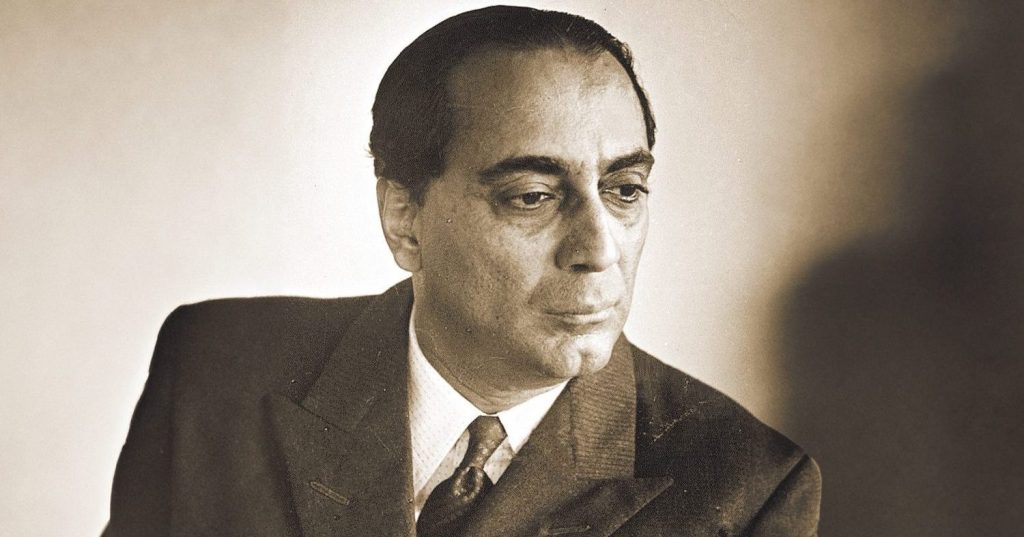
As an addition to my Week 8 prompted online commentary, I would like to highlight the work of theorist Homi K. Bhabha, specifically his key contributions within “A Commitment to Theory” in The Location of Culture (Bhabha, 1994), as elaborated by Patricia Pisters. Bhabha’s work in The Location of Culture explores how art represents, mediates, and propagates colonial and post-colonial discourse. I found the chapter “A Commitment to Theory” particularly relevant to our course discussions, as it offers a theory for cinematic theorizing itself — a practice that, at times, can feel esoteric and unmoored.
Bhabha begins his argument by criticizing the assumption of a “binarism of (European) theory versus (developing world) politics and activism” (Pisters on Bhabha: 300). He argues instead that theory and political action are mutually implicated and exist in a process of negotiation at the site of art (such as cinema). This phenomena, which Bhabha refers to as the “temporality of negotiation and translation”, signals two key revelations: (1) it “acknowledges the historical connectedness between the subject and object of critique so there can be no simplistic, essentialist oppositions”; (2) “It makes us aware that our political references and priorities…are not ‘there’ in some primordial, naturalistic sense. Nor do they reflect a unitary or homogenous political object” (1989: 118). The result of these realizations — made possible by this negotiation — is our understanding that the political object is a “discursive event”, whose “sense” can only be made in relation to its particular historical or philosophical references.
Theory’s role in emphasizing the construction of art, and thus its choices in references, allows it to be an “actor in the process of negotiation and translation [of the political object] that is never closed, finished or total” (Ibid.: 301). Bhabha further asserts that this meaning-making process of the political object is most possible and best articulated within the “Third Space”, a conceptual site which renders meaning ambivalent through its openness of signs, symbols and culture, which can be “appropriated, translated, rehistoricised, and read anew” (ibid.: 130). Third Spaces manifest in Third Cinema, among other taxonomies, and it is within our theorizing of these sites that we can participate in the temporality of negotiation and translation of the political object — rendering the colonial and post-colonial discourse less deterministic in its möbius cycles, and rather open to discursive investigation through our theoretical mediation.
Work Cited:
Bhabha, Homi K. “A Commitment To Theory”. The Location of Culture. London ; Routledge, 2004.
Pisters, Patricia, and Felicity Colman. “Homi K. Bhabha.” In Film, Theory and Philosophy, 296–307. 1st ed. Routledge, 2009.
 Jenn Thảo Nguyễn
Leave a comment