This week, we were asked to look for the punctum — “the detail that pierces or pricks the viewer — within our course material. I found this connection manifesting in several ways through Alison Bechdel’s graphic memoir, Are You My Mother?. The key punctum in this work is how Bechdel distills each character — Donald Winnicott, her various therapists, lovers, and most importantly, her mother — down to a few deeply telling details that reveal their essence. I was particularly drawn to the imagined scene of Virginia Woolf and Donald Winnicott crossing paths in London parks, each engaged in their own pursuits yet unaware that their ideas would later converge to shape insights on motherhood. These idiosyncratic details, carefully identified by Bechdel, cut through the noise, offering readers an immediate, piercing understanding of the figures who shaped her — and our — perception of the subconscious. Additionally, the memoir’s reimagining of memories and dreams within elliptical timelines mirrors the disorienting yet revelatory nature of confronting one’s past, reinforcing the thematic insights woven through each chapter, most notably: Transitional Objects, True and False Self, and The Use of an Object.
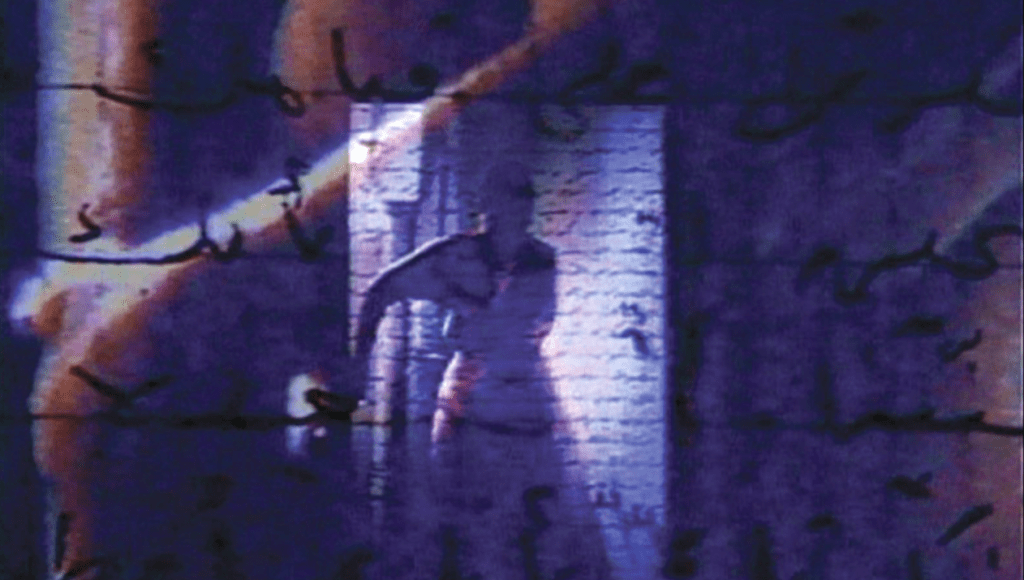
Among the films we studied, I found Mona Hatoum’s Measures of Distance particularly affecting. Perhaps the punctum for me was the layering of Hatoum’s mother’s voice — recorded in conversation in mother-tongue —over Hatoum’s own reading of her mother’s letters in English. This narration played alongside visuals of her mother’s handwriting and intimate images of her body, creating a deeply personal yet fragmented portrait. Much like Bechdel’s attention to idiosyncratic details, Hatoum lingers on the materiality of her mother’s letters — her penmanship, the glitches and dropouts of the video camera, the vulnerability of her body in the shower — all in an effort to memorialize these fragments of connection. However, the layers of superimposition also suggest how distance can unintentionally collapse the idiosyncratic into an indistinct collage. In the act of layering one detail upon another, individuality risks being subsumed by separation itself, forming a visual and emotional palimpsest of longing and loss. I was also drawn to the shifting dynamics between addresser and addressee in this epistolary form of connection: Who is the ‘you’ and who is the ‘I’ when the daughter reads the mother’s words? Does this utterance, in the service of enunciation, become yet another form of silencing the maternal, as Hirsch described in The Mother-Daughter Plot? Perhaps these entanglements are intrinsic to the palimpsest, and that mother and daughter can never be fully individuated even in separation.
 Jenn Thảo Nguyễn
Leave a comment